Atari 2600 Jr
 The initial "short rainbow" model from 1983/1984 | |
| Model code | CX-2600 JR |
|---|---|
| Internal codename | Bonnie |
| Production date | 1982 (Atari 2200), 1983-1984 (short rainbow), 1986-1992 (long rainbow) |
The Atari 2600 Jr. is the outcome of an internal program to produce a lower cost refresh of the aging Atari Video Computer System (2600) following the failure to produce the Atari 2700 that included other competing designs such as the all-in-one CX-2000 and the also all-in-one but far more spacially huge CX-2500. Put into manufacturing by late 1983, the system was confirmed to at least be released in Europe in 1984[1] but was then shelved globally for two years following Atari's acquisition by Jack Tramiel and the two year long company wide audit and shift toward the more healthy computer market, with shelved sytems put out in 1986 ahead of a new manufacturing run to sell the system as a below $50 budget system against the new generation of systems such as the Nintendo Entertainment System. The system ultimately would last into 1992 when it would die only to Atari themselves choosing to cull the amount of products being made and sold ahead of the anticipated (and ultimately company killing) Jaguar.
Development history


The system was put forth in 1982 by engineers in Sunnyvale as competition to the CX-2000 in New York under the proposed name of "Atari 2200" which was a reused code from a planned portable VCS designed earlier that year. The motherboard at this point was far more compressed than even the final result with large areas of the board being covered with exposed grounding planes to the point of being overkill. The overall layout, though, remained into the final production the following year with the most overuse of grounding plane in the lower right corner being replaced by spreading out the RF modulation components (with the area above it including a secondary 50Hz modulator and patch wire in PAL regions), which now output to a rear RCA jack connection instead of the original VCS design's use of a long internal cable lead. Interestingly, the 2200 features red paint below the power switch to indicate the system is powered on, something that must have been viewed as going too far on cost cutting as the final system has a red LED a ways below the switch as part of the metal name plate.[2]
The only known Atari 2200 unit currently resides as part of the National Videogame Museum's collection and is brought out for display from time to time alongside the Atari 2700, its state of functionality not currently disclosed[3].
Revisions
Short rainbow (1983-84)

Named for the shorter rainbow that only fills in the space below the system name on the name plate, these systems were the original manufacturing run that was shelved for two years. The motherboards in these all have a copyright date of 1983 and feature a full three chip hardware set as with all prior VCS/2600 systems. Strangely, the systems of this version that did make it out for sale were reported to come with the newer PROLine controller that is more associated with the Atari 7800 only for the 1986 release to repackage them with the old CX-40 controller instead. The packaging also seemingly changed twice, going from a large silver scheme box to a smaller "lunchbox" form factor but keeping the same silver coloring.
Long rainbow (1986)

The second released version of the system and recognized as revision A, the rainbow on the name plate has been extended to fill the entire width of the plate alongside the original logo being changed in favor of one large embossed Atari logo and the "2600" being embedded into the far right end of the rainbow. These models also carried on with the three chip hardware set until the following year and their packaging was changed from a larger silver scheme box to a slightly smaller solid red/white design to fall in line with the cheaper look that the 7800 also undertook.
One chip hardware (1987)

Made to reduce manufacturing costs even further, this model compresses the three main processors of the system (CPU, RIOT, TIA) into a single ASIC codenamed "Janus" leaving a lot of empty space on the board filled simply by traces. In the process of compacting all three chips into one the hardware now introduced compatibility issues with various games and reduced the sound output to strictly mono instead of having the separate channel pins intended for the VCS's original plans for built-in speakers. These systems are rarer both by the nature of their late release and due to many being gutted for hobby projects throughout the 00s in the wake of Ben Heck's portable Atari 2600 experiments due to its nature of being consolidated and having the lowest power draw of any official 2600 hardware release.
Production oddities
Black name plate (Ireland, presumed 1984)

An odd PAL region variant made at Atari's Ireland manufacturing plant that removed the metal plate entirely for a plastic plate with a black background and the return of the short rainbow. The reason for such a variant is unknown, as both the existing metal plate models were released across Europe and the cost savings from moving to all plastic would be largely unseen as a result. The packaging also came with its own odd variant that depicts the black plastic plate but also a PROLine controller making it further unclear if this was a regional market test or was the plan for all of Europe from 1984 onward.
White plastic test sample (presumed 1990)

An odd test sample found by the late Curt Vendel with a long rainbow name plate on a shell manufactured using the white plastic used for the Atari TT030 putting its manufacturing date to some time in 1990[8].
Official 128-in-1 model (Australia, 1991)
A very strange last ditch effort made not as a bootleg in Asia or South America, but as an official design released in Australia for the holiday 1991 season within less than a year of the 2600 being discontinued entirely[9]. While the casing for the system is still the long rainbow version in use since 1986 the motherboard inside has not only returned to a three chip setup in an oddly spaced triad arrangement with the 6532 RIOT above the cart slot, but now there are four socketed 32 kilobyte ROMs and a newly inserted four position "Game Group" switch to change between the four banks on the board with a label crudely hacked into the case mold. Interestingly there are also images of the same system with better label positioning on the packaging and text indicating it was for sale in Arabic regions with distribution being handled from Dubai.[10]
-
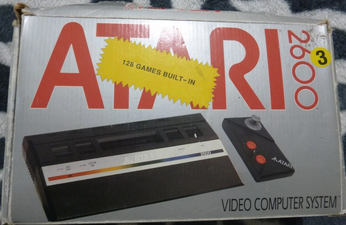 The very carefully designed box of the last ditch model
-
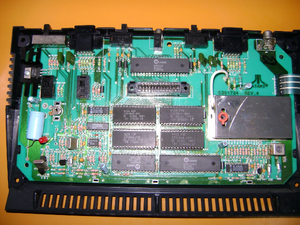 The very reworked motherboard with clear Atari branding to the upper right
-
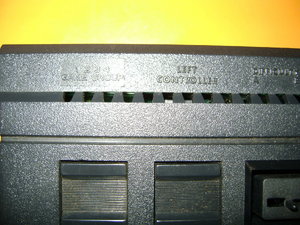 A switch only Dee Dee Ramone could've ever loved
-
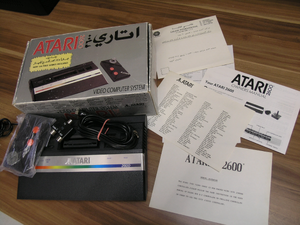 Gentlemen, welcome to Dubai, 14 years late


References
- ↑ Atari 2600 Jr. must have been released already in 1983 in Eu - AtariAge
- ↑ Atari 2200 (2600jr Original Prototype) - Atari Museum (ctrl-alt-rees hosted backup of original site)
- ↑ Earlier this month we showed... - National Videogame Museum | Facebook
- ↑ Atari 2600 Jr. (Short Rainbow) - videogamesmuseum.org
- ↑ Atari 2600 Jr. (Long Rainbow) - videogamesmuseum.org
- ↑ Compiling 2600 Jr. "Unicorn" 1-chip serial number list, please help!! - AtariAge
- ↑ 2600 Jr. with Irish cousin - Reddit
- ↑ Atari 2600 Jr (White Version) - Atari Museum (ctrl-alt-rees hosted backup of original site)
- ↑ 128-in-1 FAQ - AtariAge
- ↑ Australian 2600 junior 128-in-1 - AtariAge

